
If you’ve been on social media lately, you have probably seen viral videos buzzing about a new, cheap type of gold discovered as Bangladesh Red Gold. In these clips, people claim this “red gold” looks exactly like the real thing, even when cut or crushed into powder. With real 22-carat gold prices soaring to around ₹14,890 per gram, the idea of buying gold for dirt cheap sounds like a miracle.
However, I am writing this to protect you from losing your hard-earned savings. This viral “discovery” is actually one of the most dangerous financial traps of the year.
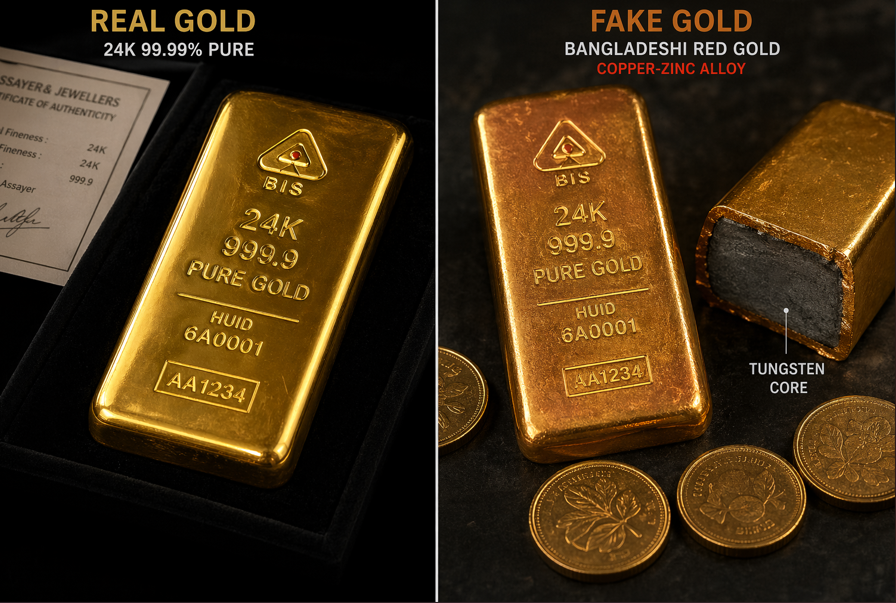
What Exactly is “Bangladeshi Red Gold”?
- The Chemical Illusion: What scammers are calling “Aka Stone” or “Bangladeshi Red Gold” contains absolutely zero pure gold. It is simply a mix of cheap everyday metals mostly copper, nickel, and zinc.
- The Shine: The metal is heavily polished using advanced industrial techniques so it perfectly mimics the bright shine of 24-carat gold.
- The Reality: Real “red” or rose gold is just a normal jewelry-making technique where real gold is mixed with copper. What the scammers are selling is a worthless fake that will eventually turn black or green.
Anatomy of the Scam: How They Fool You
Scammers are smart, and they know exactly how to trick everyday buyers using a classic “bait-and-switch” routine. Fraudsters often disguise themselves as poor construction workers or laborers. They will tell you a convincing story about finding “buried treasure” or ancient coins at a work site.
They hand you one or two real gold coins and tell you to get them tested at a jeweler. When the jeweler confirms the sample is 100% real, you naturally feel safe and excited. Trusting them, you buy their whole stash at a huge discount. But the bulk of what they give you is actually that worthless copper-zinc alloy.
Why don’t simple tests catch the fakes?
- Weight: The fake alloy is made to feel just as heavy as real gold.
- Magnetism: Just like real gold, the fake alloy is non-magnetic.
- Acid Tests: Scammers often coat the fake metal in a thick layer of real gold, meaning it will easily pass a surface-level acid scratch test.
- The “Smuggled” Excuse: Whenever someone asks why the gold is so cheap, the scammers use a standard excuse: “It is smuggled or undocumented, so I can’t sell it in a regular shop”.
How to Protect Your Capital
Do not rely on street tests like biting the gold or using a magnet. Follow these rules instead:
- The 10% Rule: Gold is a global commodity with a standard price. If someone is offering you gold for 10% (or more) below the official market price, it is a massive red flag. You are buying a fake story, not gold.
- Verify the HUID: Never buy gold without official certification. In India, always look for the BIS Hallmark. Today, real gold comes with a unique 6-digit HUID (Hallmark Unique Identification) number. You can type this number into the government’s BIS Care App to instantly verify if the jewelry is legit.
- Ask for an X-ray (XRF Scan): Professional jewelers have an XRF machine. It acts like an X-ray, looking deep inside the metal to tell you exactly what it is made of, without damaging the piece.
- Buy from the Source: Always buy from trusted, official jewelers, never from strangers on the street offering a deal.
The Absurdity of the Pricing:
| Type of Gold | Approximate Price Per Gram |
|---|---|
| Real 22k Gold Market Rate | ~ ₹14,800 to ₹14,890 |
| Scam “Red Gold” Price | ₹90 to ₹2,000 |
Remember this golden rule: Gold is a reliable store of value specifically because it is incredibly rare. If it is cheap, easy to find, and being sold at a massive discount, it isn’t gold.
Please share this post with your friends, family, and parents to protect them from falling for these “too-good-to-be-true” jewelry deals.
Want to learn more? I will be breaking down the exact math, psychology, and testing methods of the Bangladeshi Red Gold scam in detail in my upcoming video! Make sure to subscribe Sanjay Kathuria on YouTube so you don’t miss it and can keep your investments safe!